
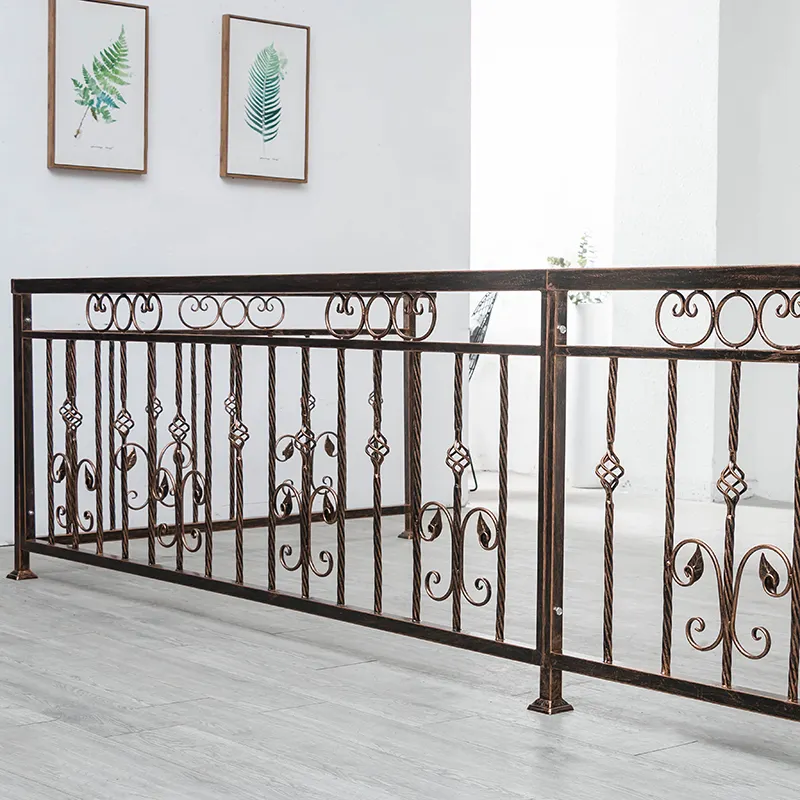
How Wrought Iron Fences Are Made | Full Production Process
Introduction
Wrought iron fences have long been a symbol of elegance, durability, and security. From residential homes to large commercial projects, they are widely used across the United States and Europe due to their timeless design and long lifespan.
But have you ever wondered how a wrought iron fence is actually made?
In this article, we’ll walk you through the complete production process of wrought iron fences, from raw materials to final coating. Whether you are a contractor, wholesaler, or distributor, understanding this process will help you choose the right supplier and ensure product quality.
1. Raw Material Selection
The production of a high-quality wrought iron fence starts with selecting the right steel.
Most manufacturers use low-carbon steel, which offers:
Excellent strength
Good flexibility
Easy shaping and welding
High-quality raw materials are critical because they directly impact:
Fence durability
Welding strength
Surface finish quality
A reliable factory will always source certified steel and conduct material inspections before production begins.
2. Mold Design & Development (Key Advantage)
One of the most important steps — and often overlooked by buyers — is mold design.
For decorative wrought iron fences, components like:
Scrolls
Spearheads
Rosettes
are produced using stamping molds.
Why Mold Development Matters:
Determines product precision
Affects production efficiency
Reduces long-term cost
Factories with in-house mold design capability can:
✔ Develop custom designs faster
✔ Lower tooling costs
✔ Ensure consistent product quality
👉 This is a major advantage compared to traders or outsourcing factories.
3. Cutting & Material Preparation
After raw materials are selected, steel bars, tubes, or sheets are cut into required sizes.
Common processes include:
Laser cutting
Shearing
Saw cutting
Precision at this stage ensures:
Accurate dimensions
Easier assembly
Reduced material waste
4. Stamping & Forming
This is where the fence starts to take shape.
Using automatic stamping machines, flat steel is transformed into decorative components such as:
Iron scrolls
Leaves and flowers
Decorative panels
Key Benefits of Stamping:
High efficiency for mass production
Consistent shapes and sizes
Lower labor cost
Advanced factories combine:
Automatic machines
Skilled workers
to achieve both speed and craftsmanship.
5. Bending & Forging
For curved and artistic designs, bending and forging are essential.
Processes include:
Heat bending
Cold bending
Manual forging for custom parts
This step adds:
✔ Artistic value
✔ Unique design features
✔ Flexibility for customization
6. Welding & Assembly
All components are then assembled through welding.
This is one of the most critical steps affecting:
Structural strength
Safety
Product lifespan
Professional factories use:
CO₂ welding / MIG welding
Skilled welders
Fixed jigs for accuracy
Quality Welding Should Be:
Smooth and clean
Strong without weak points
Free from cracks or defects
7. Surface Treatment (Anti-Rust Protection)
To ensure long-term outdoor performance, surface treatment is essential.
Common Processes:
- Polishing & Grinding
- Sandblasting
- Powder Coating (Most Popular)
High-quality coating can protect the fence for 10–20 years or more.
8. Quality Inspection
Before packaging, each product undergoes strict quality control.
Inspection includes:
Size and dimension check
Welding strength
Surface finish quality
Coating thickness
Reliable manufacturers follow international standards to ensure consistency.
9. Packaging & Container Loading
For export, proper packaging is crucial.
Professional factories use:
Bubble wrap / foam protection
Steel pallets or wooden crates
Secure container loading
This ensures:
✔ No damage during shipping
✔ Easy unloading at destination
✔ Safe long-distance transport
10. Global Export & Delivery
Wrought iron fences are widely exported to:
United States
United Kingdom
Germany
France
Australia
Experienced exporters provide:
Fast production timelines
Efficient logistics coordination
Complete export documentation
Why Choose a Full-Service Manufacturer?
Not all suppliers are the same.
A factory that integrates:
Mold development
Stamping production
Welding & finishing
can offer significant advantages:
✔ Faster Production Time
✔ Lower Overall Cost
✔ Better Quality Control
✔ Strong Customization Ability
This is especially important for:
Construction projects
Large wholesale orders
Custom design requirements
Conclusion
The production of wrought iron fences is a combination of engineering precision and artistic craftsmanship.
From raw material selection to final coating, every step plays a crucial role in ensuring durability, aesthetics, and performance.
If you are sourcing wrought iron fences, always choose a manufacturer that:
Has in-house production capabilities
Offers customization
Ensures strict quality control
📩 Get a Quote Today
Looking for a reliable wrought iron fence supplier?
We provide:
✔ Custom designs
✔ Factory direct pricing
✔ Fast global delivery
👉 Send us your drawings or requirements today and get a quote within 12 hours.
Call us/whatsapp : 86-18724761629
Qingdao Benxiang Artistic Wrought Iron Co., Ltd.
Website : https://www.bxwroughtiron.com
Alibaba: https://qingdaobenxiang.en.alibaba.com/
Address : Beian Subdistrict Jimo City,Qingdao,China